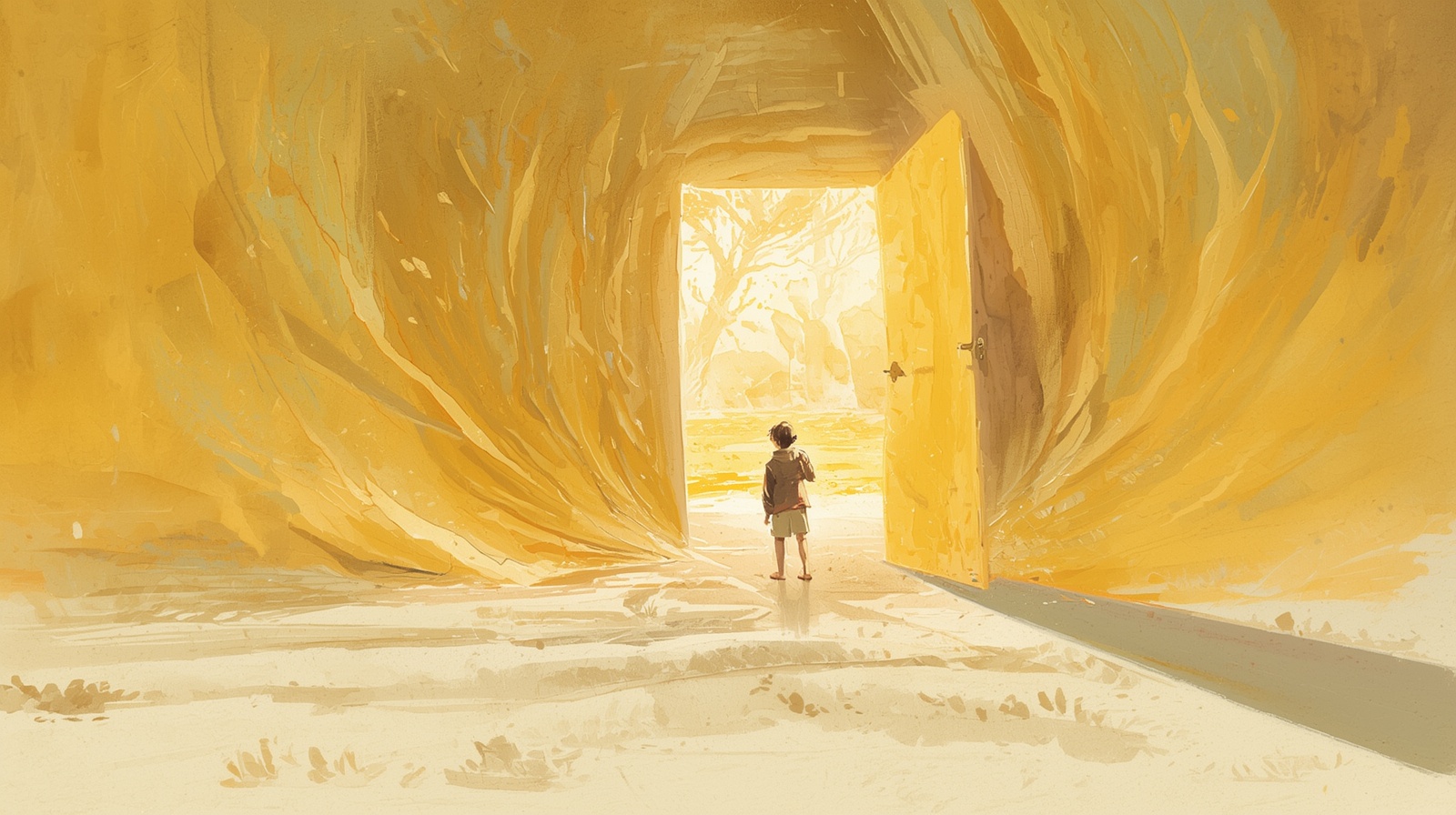
We've all heard the name Moses before but do you really know his story?
Moses' story starts before he was even born. Around the time of his birth, the king of Egypt (called a Pharaoh) issued an order: every Hebrew baby boy must be put to death. Why? Because he feared the Hebrews and believed that if enough of them grew up to become strong men like their fathers, they'd fight the Egyptians and demand their freedom. Keep in mind, all of the Israelites were still slaves to the Egyptians at this point.
Moses' mother did the only thing she could think of to save her son. She built a small basket, waterproofed it with tar and pitch, and placed her son in the Nile River, trusting that God would help him find a new home. A safer one. Think of it kind of like leaving a baby outside a fire station, except there was no such fire station available in ancient Egypt, so his mother did what she could.
Who found this baby floating along in the river, you ask? None other than the daughter of the Pharaoh who had ordered the killings in the first place. Uh oh. Not good.
But instead of handing him over to be killed, she took him in as her own. She saw a helpless baby and thought of nothing other than giving him a home, so she raised him as a prince of Egypt (not a bad step-up from almost being murdered).
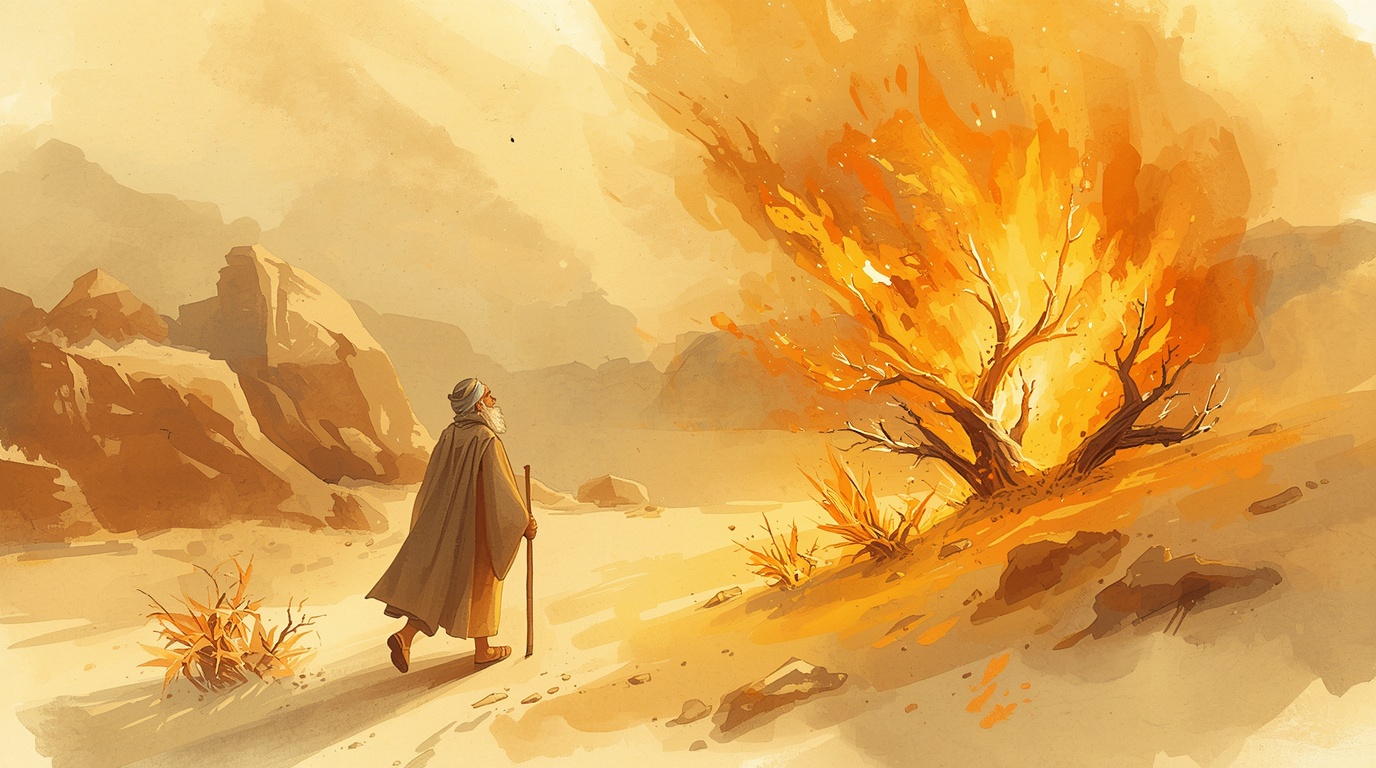
Decades later, we find Moses hiding away in the wilderness after standing up for a Hebrew slave. This time, Pharaoh really was going to have him killed, so he fled. And out in the wilderness is where he came face to face with that burning bush. God spoke to him through it and gave him the most important mission of his life: return to Egypt, face Pharaoh, and set the Hebrews free. Moses already had a pocketful of excuses ready. God didn't care.
"I'm nobody, just a runaway slave myself." God answered: I will be with you.
"Who will believe anything I have to say?" God answered: I'll give them signs.
"I'm really not a very good public speaker." God answered: I'll write the script for you.
"Please, there has to be someone better for this." God answered: I chose YOU.
So, out of excuses and with a burning bush talking to him, he went.
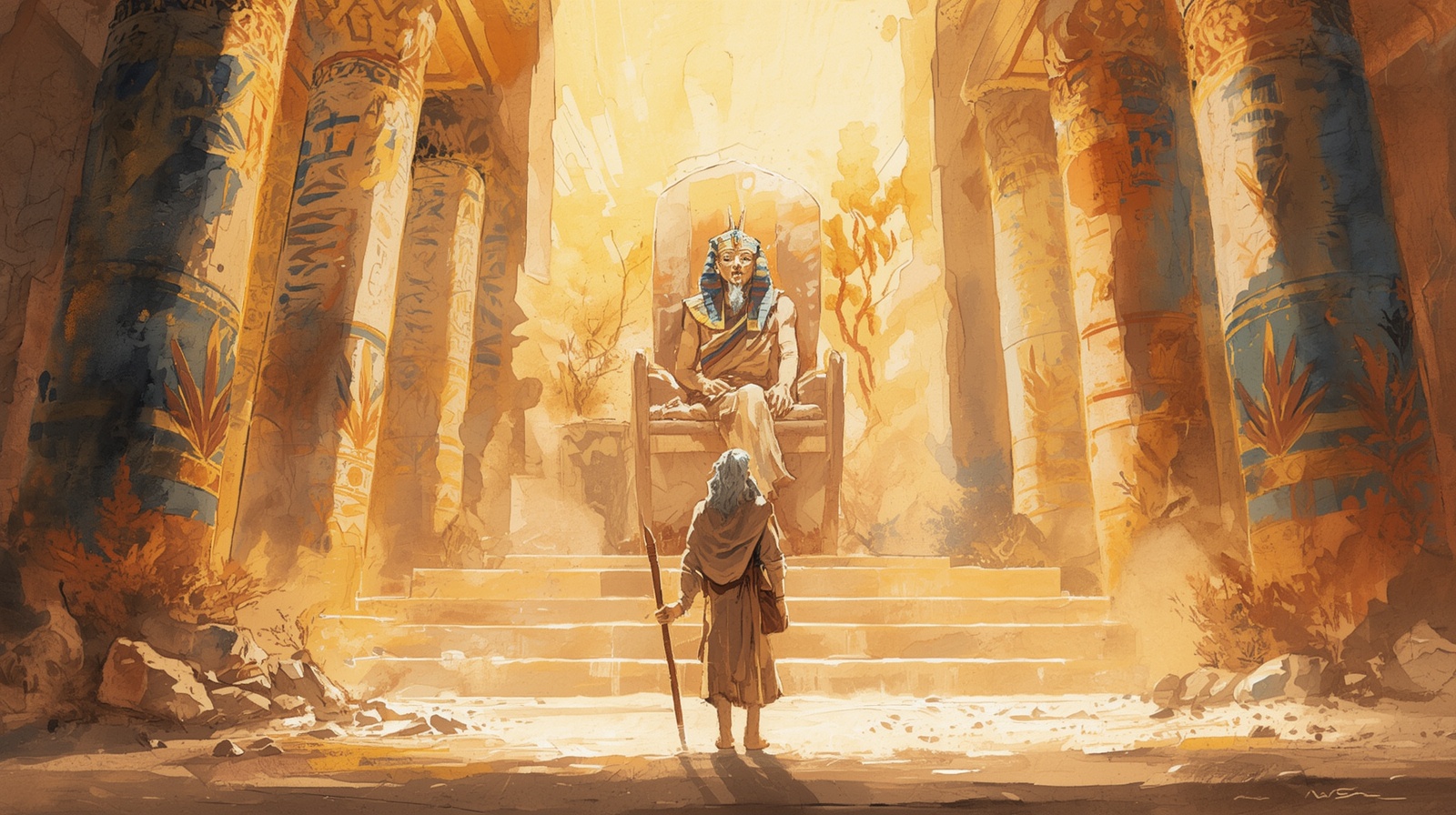
What followed was a showdown for the ages. Moses returned to the same Pharaoh who had just earlier ordered him to be killed and said, "Let my people go." Pharaoh said, "I don't think I will. Scram." Moses promised it wasn't the last he'd hear from him.
Then came the signs that God had promised, and these weren't as simple as burning bushes.
The Ten Plagues
- 1.Blood water. First, the entire Nile River (the one baby Moses floated along many years before) turned to blood. No one could drink from it!
- 2.Frogs. Yes, frogs. So many that they overran the land, invading homes, beds, and kitchens. Ribbit!
- 3.Tiny bugs. If you thought frogs were bad, the dust itself turned into swarms of lice and gnats — the kind that get in your hair and itch for days.
- 4.Flies. More bugs infesting Egypt. Not only gross but bad for crops and livestock.
- 5.Sick animals. All the farm animals in Egypt became extremely sick. Some died.
That was the easy part. Now come the bad ones.
- 6.Boils. Now things go from bad to worse. Painful sores broke out all over people's skin, and there was no cure.
- 7.Devastating hail. A massive storm unlike anything the world had ever seen. Giant hailstones mixed with fire, destroying crops and anything left outside.
- 8.Locusts. More bugs! Sweet. This time in the millions, sweeping in like a living storm cloud to eat up every last crop that wasn't already demolished by the hail.
- 9.Three days of total darkness. A deep, unnatural darkness covered all of Egypt for three days straight. Meanwhile, the Hebrew villages still had light.
- 10.Death of the firstborn. The straw that broke the camel's back. The oldest child of Pharaoh dies overnight. It was this plague that finally convinced Pharaoh that this was more than coincidence. It was the Hebrew God sending him a message he could no longer ignore. Let my people go.
So Pharaoh finally did what Moses asked. He let the Hebrew slaves go. Or at least, he did at first.
Soon after releasing the Hebrews as the plagues subsided, Pharaoh changed his mind. (loser!!) He sent his entire army after the fleeing Israelites to bring his slaves back. God had something else in mind.
As the Egyptian army chased after Moses and his people, God gave him one more miracle. With a wave of his staff, the Red Sea parted in two, and Moses and his people walked straight through. The Egyptian army, not understanding that God opened this door for the Hebrews and not for them, pursued them into the sea. Then God closed the door and swept them away.
Moses went on to lead these people he had saved from captivity for forty years. Along the way, he climbed a mountain and came back down with the Ten Commandments. You have probably heard of those. Unfortunately for Moses, that long journey ended in the desert. He never reached the Promised Land himself. Why? Because after so many years of obeying God, he finally chose to disobey, and for that he was punished. He would never see the land God had carved out for his people.
He never got to walk through the door he spent forty years building. Millions of people did though. Not a bad legacy for a shepherd who just wanted to be left alone.